Maths
Share this page
Intent
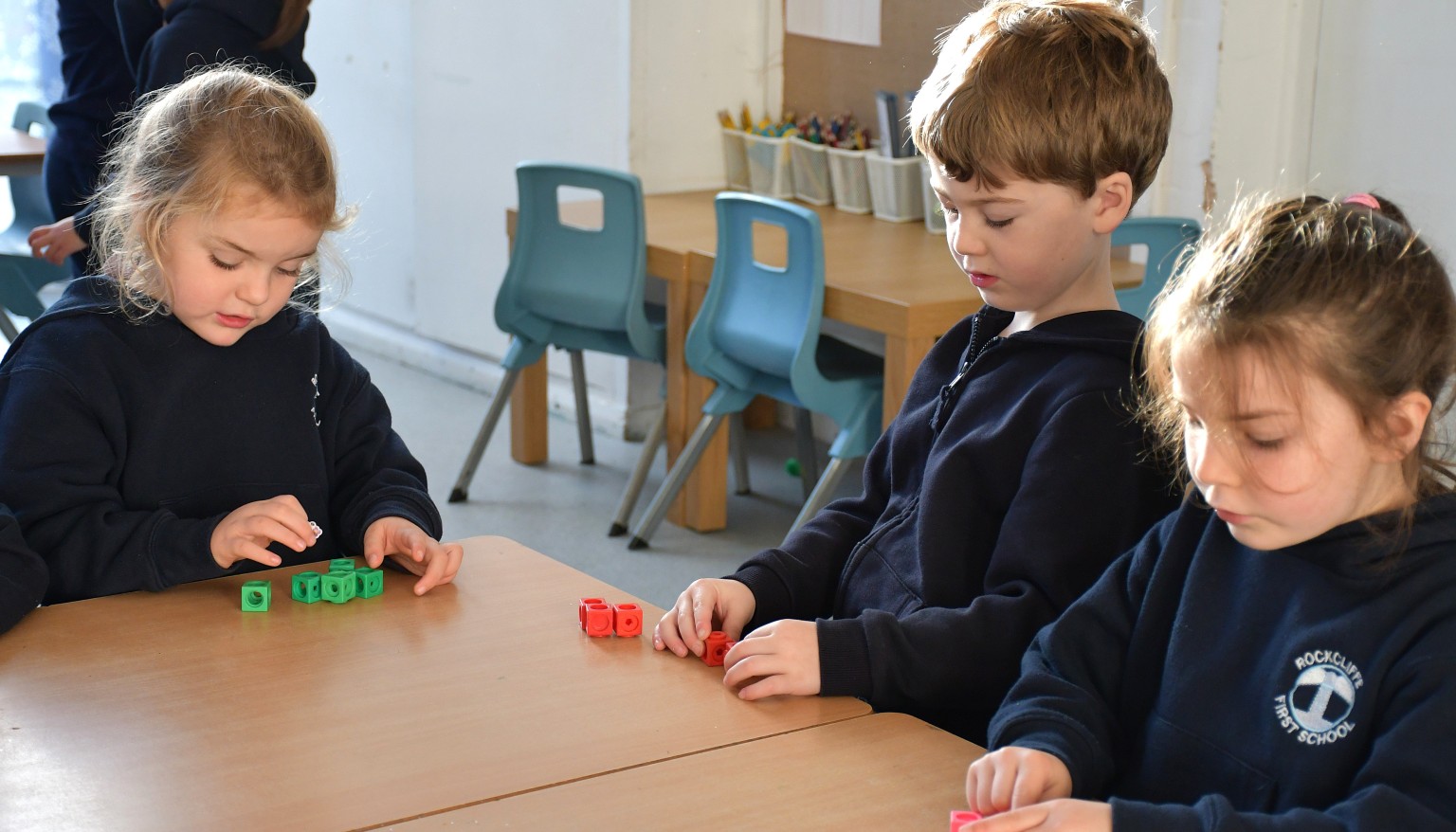
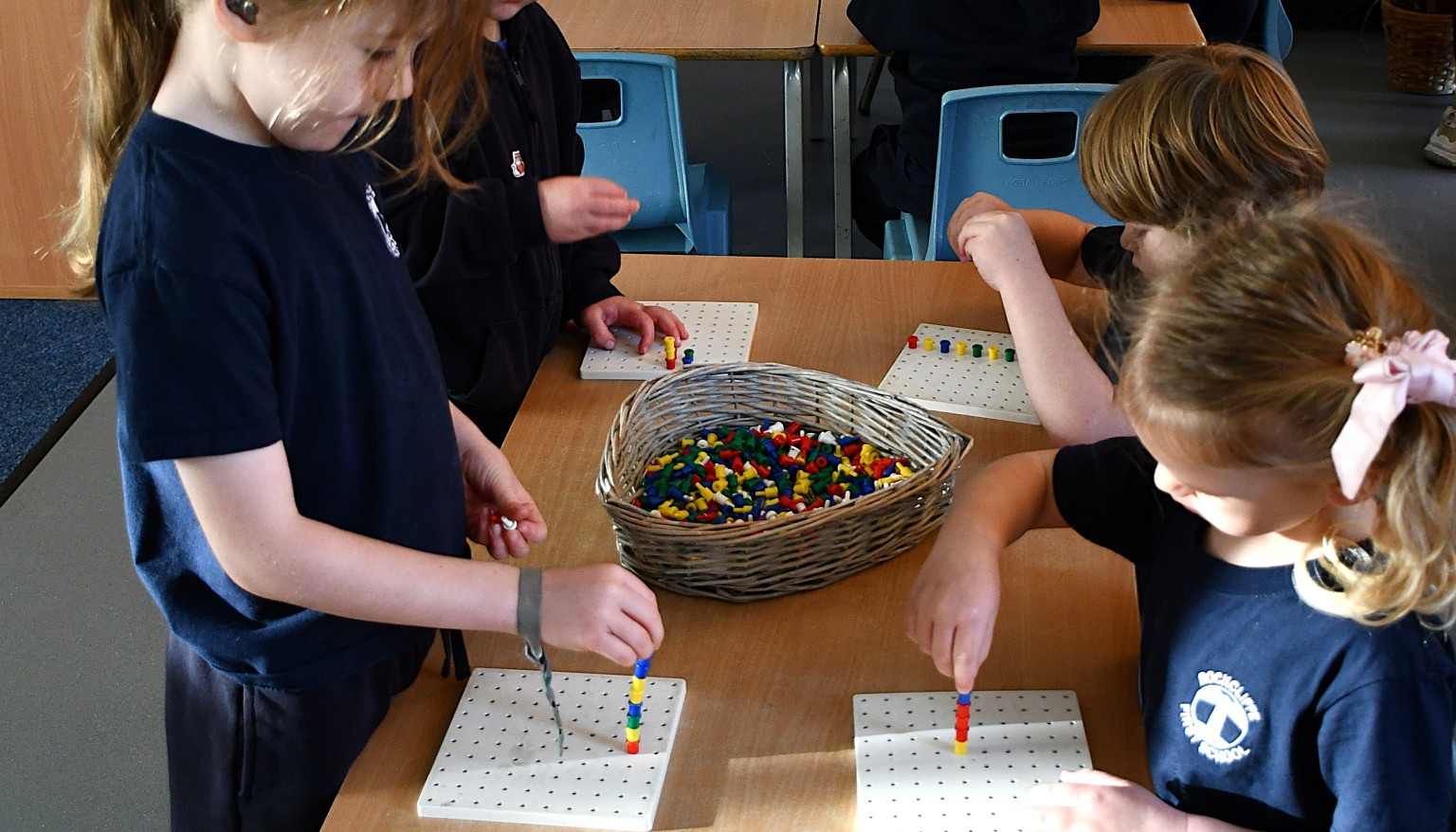
At Rockcliffe, we strive to develop confident and successful mathematicians who have a thorough knowledge and understanding of the fundamentals of mathematics. Our intention is to develop children’s fluency and conceptual understanding. We aim for our pupils to gain procedural fluency (knowing how to do maths) and conceptual fluency (knowing why maths works). In doing so, children can build on firm foundations to reason mathematically and problem solve efficiently across each strand of the maths curriculum. At the core of our curriculum is the concrete, pictorial and abstract approach to maths. We provide a rich, balanced and progressive curriculum that caters for the needs of all children through small, sequential steps in teaching and learning, purposeful use of maths manipulatives and scaffolds, and challenges that facilitate deep, meaningful thinking and connections within and across strands.
Implementation
At Rockcliffe, we have adopted a mastery approach to the teaching of maths having worked successfully for a number of years with the Great North Maths Hub. This approach seeks to build flexible learners with a depth of understanding that allows them to access a range of problems that are presented in a variety of formats.
The principles and features that characterise our approach are:
- An expectation that all children are capable of achieving high standards in maths.
- The large majority of children progress through their curriculum content at the same pace. Differentiation is achieved by emphasising deep knowledge, extension activities and through individual support and intervention.
- Teaching is supported by carefully crafted lessons and resources to foster deep conceptual and procedural knowledge.
- Practice and consolidation play a central role. Carefully designed variation builds fluency and understanding of underlying mathematical concepts.
- Teachers use precise questioning in class and expect answers in full sentences, to assess children’s conceptual and procedural knowledge.
- Daily Assessment for Learning and timely pre- and post-unit assessments enable teachers to assess children regularly and identify those requiring intervention so that all children keep up.
Lesson Approach and Teaching Methods:
Small steps: We believe in the importance of small steps to ensure a deeply embedded curriculum that is accessible to all. We use the NCETM small steps to guide our planning and teaching of NC objectives.
Concrete > Pictorial > Abstract (CPA): In order to develop mastery, maths teaching at Rockcliffe utilises the CPA approach. When introducing new concepts children are given the opportunity to use concrete objects to represent problems. Children are then encouraged to represent these objects pictorially so that they can make a mental connection between the physical object and abstract levels of understanding. Finally, children move on to understand and represent mathematical concepts in an abstract way using symbols. These three stages are not linear; teachers will often go back and forth between each CPA representation or model them alongside each other to reinforce concepts.
Stem Sentences: We use accurate mathematical vocabulary in a highly structured sentence that provides pupils with a way to communicate their ideas with mathematical precision as well as clarity.
Fluency: We understand that fluency of learnt maths facts is essential to lower children’s cognitive load and enable them to further their maths knowledge. ‘Trio Time’ is used daily to teach and revisit number bonds, times tables and key knowledge linked to each strand of the curriculum. In Reception and KS1, teachers use the Mastering Number programme to build children’s fluency in calculation and a confidence and flexibility with number.
Feedback, Intervention & SEND: Teachers and teaching assistants provide on the spot, immediate feedback in lessons, either with individual pupils, groups or whole class. We use the 1stClass@Number programme to provide tailored intervention where additional support is needed beyond the daily maths lesson. Where possible all children follow their year group’s curriculum with added support, scaffolding, resources and even smaller steps where needed. Occasionally, some pupils may be working well below their year group’s curriculum. Where this is the case, teachers design their lessons to include these pupils as much as possible using suitable questioning and encouraging independence by planning using the same or similar topics (e.g. place value) but from a preceding year group’s programme of study.
Early Years : We relate the mathematical aspects of the children’s work to the Development Matters statements and the Early Learning Goals, as set out in the EYFS profile document. Children develop their understanding through planned, purposeful play and through a mix of adult-led and child-initiated activity. The NCETM Mastering Number programme is used in Reception as a systematic approach to teaching counting, subitising and composition of number, securing excellent development of number sense that can be built upon in KS1.
Impact
Maths lessons are engaging and well-resourced with children acknowledging that the journey to finding an answer is as valuable as reaching it. Our children are resilient and successful. They make measurable progress against the National Curriculum objectives. Children are keen to attempt a range of problems and use the equipment they need to help them to learn, along with the strategies they think are best suited to each scenario.Children are able to reason verbally, pictorially and in written form. They use stem sentences effectively to share their thinking and generalisations. Well-planned sequences of learning support children to develop and refine their maths skills. They make connections within and across different areas of maths.
Our Curriculum
How to help at home:
(Click the links)